
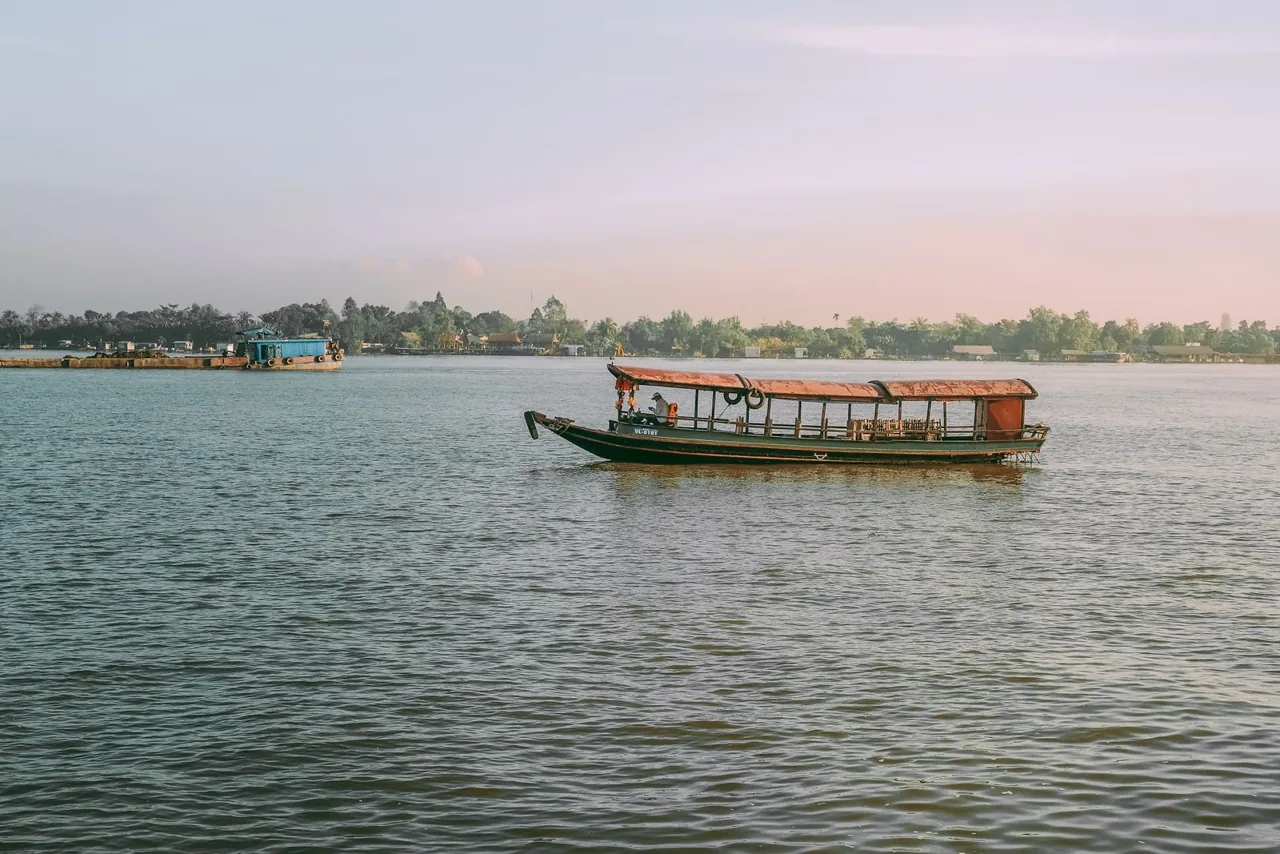
The Mekong does not hurry, and the towns along it have learned the same trick. Travel its banks and you find a string of riverside places that ask you to slow to the speed of the water, to spend your mornings watching the boats and your evenings watching the light go down over the far bank. It is some of the most restful travel in Southeast Asia, and almost none of it is about ticking off sights.
The river itself is the headline act. The Mekong runs for thousands of kilometres from the Tibetan Plateau down through China, Laos, Thailand, Cambodia and Vietnam, and the stretch through Laos and northern Cambodia is where the river towns are at their slowest and most photogenic. This is a place you experience at walking pace, or better still from a deck chair.
Luang Prabang sets the tone
If there is a capital of slow river travel it is Luang Prabang, the old royal town in northern Laos, where gilded temples meet French colonial shophouses and the whole place is small enough to cross on foot. The dawn alms-giving, when monks process through the streets to receive offerings, is the kind of quiet ritual that rewards early rising. Stay in a converted shophouse near the river, rise with the mist, and let the day come to you.
Downriver to the quiet end
Further south the towns thin out and slow down even more. The Four Thousand Islands, where the Mekong braids into a maze of channels near the Cambodian border, are about as close to doing nothing as travel gets, all hammocks and bicycles and the chance of spotting a rare river dolphin. Cross into Cambodia and Kratie offers more of the same gentle rhythm, a faded riverfront town that most itineraries skip and are poorer for it.
How to plan a slow stay
The trick is to resist the urge to keep moving. River travel here is unhurried by design, the boats are slow and the roads are worse, so pick two or three towns rather than six and give each of them several nights. Many travellers bookend a trip like this with a night or two in Bangkok, where the same love of watching life pass on the water turns into something far more polished — a slow dinner on the Chao Phraya is the easy luxury at the end of a rough-and-ready river run, and if you want a sense of what is worth booking, the rundown of the best dinner cruise in Bangkok from people who actually go is a good place to start. Accommodation along the Mekong itself ranges from simple riverside guesthouses to a handful of genuinely lovely boutique places in the bigger towns, and a room with a river-facing balcony is worth paying a little extra for.
Time your trip for the dry season if you can, roughly November to February, when the river is calm, the skies are clear and the heat is bearable. Then do the hardest thing of all on a trip like this, which is nothing at all. Sit on the balcony, watch the boats, and let the great river set the pace. It has been doing this for a very long time, and it knows what it is about.